General
• Interfaces
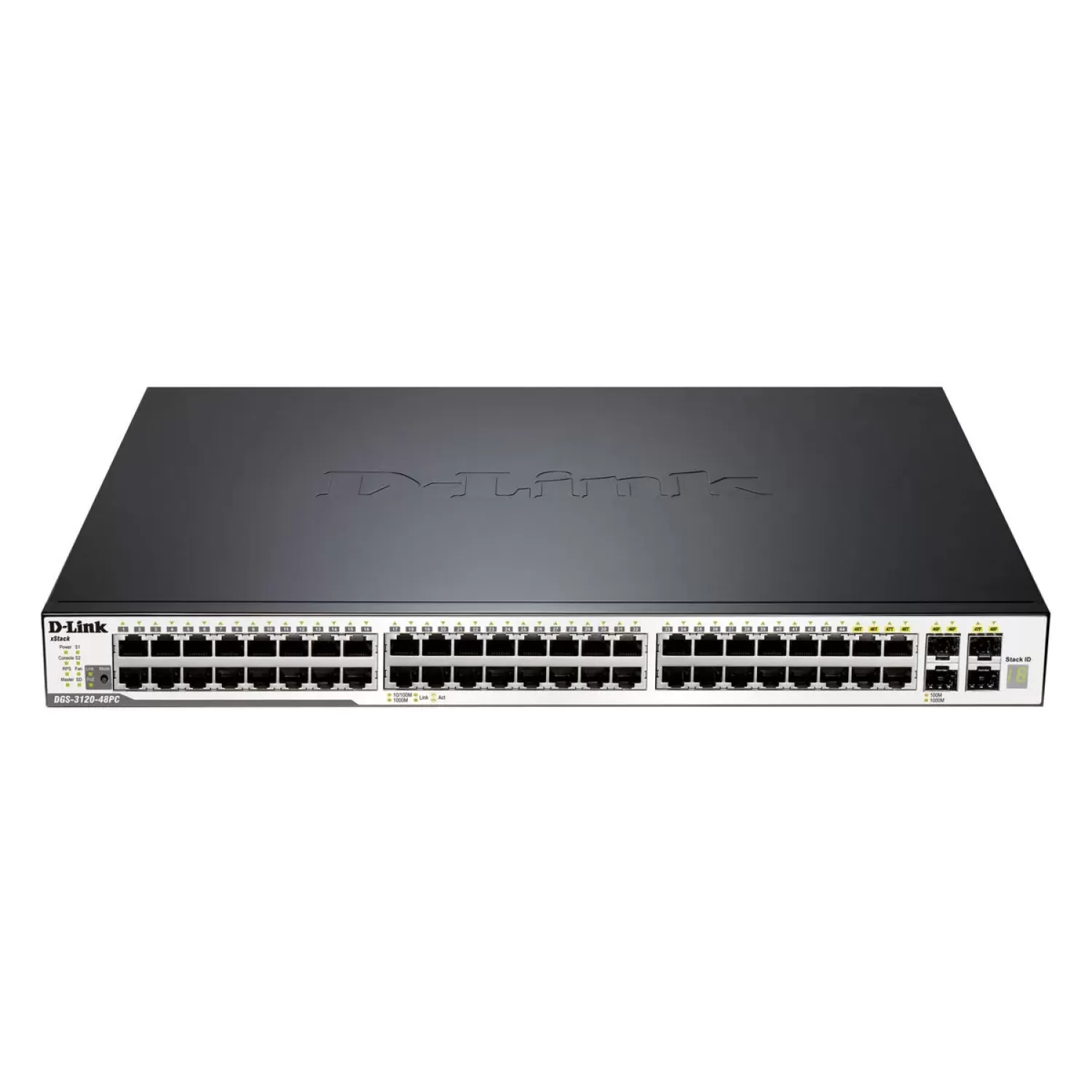
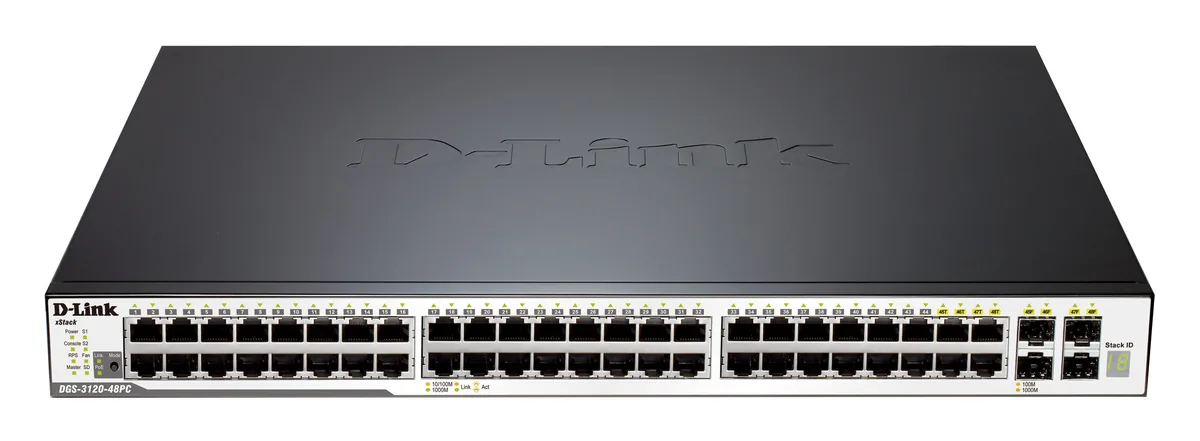
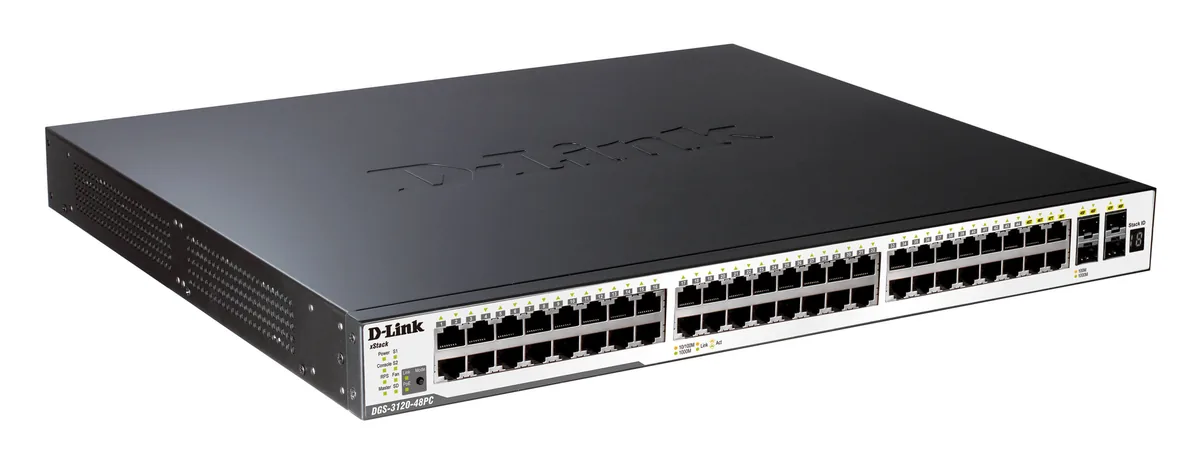
• 44× 10/100/1000BASE‑T ports
• 4 combo 10/100/1000BASE‑T/SFP ports
• 2× 10G CX4 ports
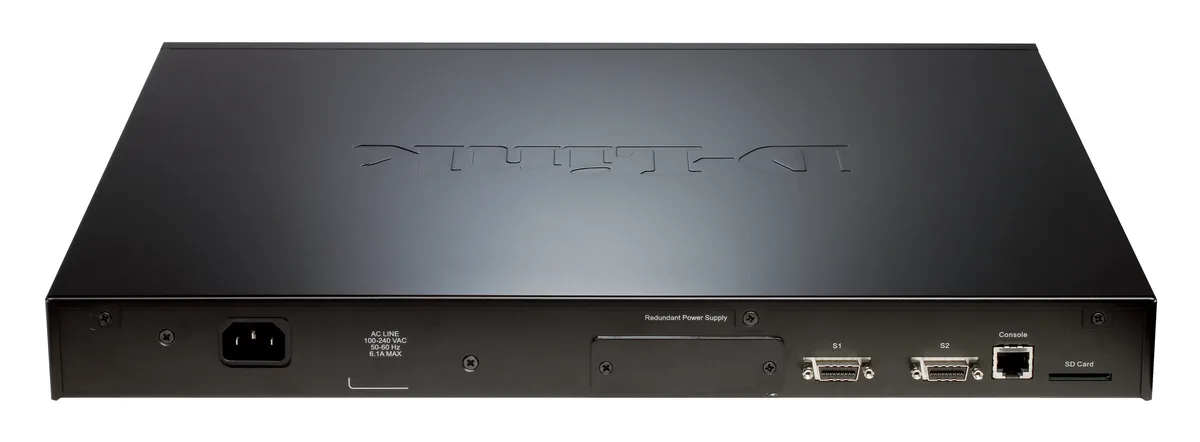
• Optional redundant power supply: DPS‑700
• Console port: RJ‑45
• Stacking ports: 2
• SD card slot: 1
Performance
• Switching capacity: 136 Gbps
• Packet forwarding rate (64 bytes): 101.19 Mpps
• Packet buffer: 2 MB
• Flash memory: 32 MB
PoE
• PoE standards
• Supports 802.3af and 802.3at
• PoE power budget
• 370 W
• 740 W (with DPS‑700 RPS)
Software Features — Base Image (SI)
Stacking capabilities
• Physical stacking
• Stacking bandwidth up to 40 Gbps
• Up to 6 units per stack
• Virtual stacking:
• D‑Link Single IP Management (SIM)
• Up to 32 units in a virtual stack
L2 Features
• MAC address table: 16K entries
• Flow control
• 802.3x Flow Control
• HOL (Head‑Of‑Line) blocking prevention
• Jumbo frames up to 13 KB
• 802.3ad link aggregation (LACP)
• Up to 32 groups per device, 8 Gigabit ports per group
• Spanning Tree
• 802.1D STP
• 802.1w RSTP
• 802.1s MSTP
• BPDU filtering
• Root restriction
• Loopback detection
• Port mirroring
• One‑to‑One
• Many‑to‑One
• Flow‑based
• RSPAN mirroring
L2 Multicasting
• IGMP Snooping
• Support for IGMP v1/v2/v3 snooping
• Supports 1024 IGMP groups
• Per‑port/host Fast Leave for IGMP snooping
• Restricted Multicast IP
• Up to 24 IGMP filtering profiles, 32 ranges per profile
• MLD Snooping
• Support for MLD v1/v2 snooping
• Supports 1024 MLD groups
• Host‑based Fast Leave for MLD
VLAN
• VLAN groups
• Up to 4K VLAN groups
• GVRP
• Up to 255 dynamic VLAN groups
• 802.1Q tagged VLAN
• Port‑based VLAN
• 802.1v protocol VLAN
• Voice VLAN
• MAC‑based VLAN
• ISM VLAN
• Asymmetric VLAN
• Private VLAN
• VLAN trunking
QoS — Quality of Service
• 802.1p
• 8 queues per port
• Queue management
• Strict Priority
• Weighted Round Robin (WRR)
• Strict + WRR combination
• Supported actions for flows
• Remark 802.1p priority tag
• Remark ToS/DSCP
• Bandwidth control
• CoS based on
• Switch port
• VLAN ID
• 802.1p priority queues
• MAC address
• IPv4 address
• DSCP
• Protocol type
• TCP/UDP port
• User‑defined packet content
• IPv6 address
• IPv6 Traffic Class
• IPv6 Flow Label
• Bandwidth control
• Port‑based (ingress/egress, minimum granularity 8 Kbps)
• Flow‑based (ingress/egress, minimum granularity 8 Kbps)
• Three‑Color Marker
• Minimum granularity CIR/PIR: 8 kbps
• Two‑Rate Three‑Color Marker (trTCM), CBS/PBS
• Single‑Rate Three‑Color Marker (srTCM), CBS/EBS
Access Control Lists (ACL)
• ACL based on
• 802.1p priority
• VLAN ID
• MAC address
• EtherType
• IPv4 address
• DSCP
• Protocol type
• TCP/UDP port numbers
• User‑defined packet content
• IPv6 address
• IPv6 Flow Label
• IPv6 Traffic Class
• Supports up to 1.5K ingress rules
• Time‑based ACL
• CPU interface filtering
Security
• SSH v2
• SSL v1/v2/v3
• Port security
• Up to 64 MAC addresses per port/VLAN
• Broadcast/Multicast/Unicast storm control
• Traffic segmentation
• D‑Link Safeguard Engine
• NetBIOS/NetBEUI filtering
• DHCP server screening
• ARP spoofing prevention
• DoS attack prevention
• BPDU protection
AAA — Authentication, Authorization, and Accounting
• 802.1X
• Port‑based control
• Host‑based control
• Identity‑driven policy assignment (VLAN/ACL/QoS)
• Authentication database failover
• Web‑based Access Control (WAC)
• Port‑based control
• Host‑based control
• Identity‑driven policy assignment (VLAN/ACL/QoS)
• Authentication database failover
• MAC‑based control
• Port‑based control
• Host‑based control
• Identity‑driven policy assignment (VLAN/ACL/QoS)
• Authentication database failover
• Host‑based JWAC (for Japan)
• Guest VLAN
• Microsoft NAP
• 802.1X NAP support
• DHCP NAP support
• RADIUS Accounting
• TACACS+ Accounting
• RADIUS and TACACS authentication for switch access
• Four levels of user account control
Green Features
• RoHS compliance
• Power saving by link status
• Power saving by cable length
• Time‑based PoE
• IEEE 802.3az Energy Efficient Ethernet (EEE)
OAM — Operations, Administration, and Maintenance
• Cable diagnostics
Management
• Web‑based management interface (Web GUI)
• Command‑line interface (CLI)
• Telnet server
• Telnet client
• TFTP client
• ZModem
• SNMP v1/v2c/v3
• SNMP traps
• System log
• RMON v1:
• Supports groups 1, 2, 3, 9
• RMON v2:
• Supports ProbeConfig group
• LLDP
• BootP/DHCP client
• Auto‑configuration via DHCP
• DHCP Relay
• DHCP Option 12
• DHCP Option 82
• Flash file system
• Multiple firmware images
• Multiple configurations
• CPU monitoring
• Debug command
• SNTP
• Password recovery
• Password encryption
• Trusted host
• Microsoft NLB (Network Load Balancing) support
• ICMPv6
MIB
• RFC 1213 MIB II
• RFC 4188 Bridge MIB
• RFC 1157, 2571‑2576 SNMP MIB
• RFC 1907 SNMPv2 MIB
• RFC 1757, 2819 RMON MIB
• RFC 2021 RMONv2 MIB
• RFC 1398, 1643, 1650, 2358, 2665 Ether‑like MIB
• RFC 2674 802.1p MIB
• RFC 2233, 2863 IF MIB
• RFC 2618 RADIUS Authentication Client MIB
• RFC 2620 RADIUS Accounting Client MIB
• RFC 2925 Ping & Traceroute MIB
• RFC 2674, 4363 802.1p MIB
• RFC 1065, 1066, 1155, 1156, 2578 Structure of MIB
• RFC 1215 MIB Trap Conventions
• RFC 1212 Concise MIB definitions
• RFC 1215 MIB Trap Conventions
• RFC 1157, 2571‑2576 SNMP MIB
• RFC 4022 MIB for TCP
• RFC 4113 MIB for UDP
• RFC 4293 IPv6 SNMP Management Interface MIB
RFC Standards Compliance
• RFC 768 UDP
• RFC 791 IP
• RFC 792, 2463, 4443 ICMP
• RFC 793 TCP
• RFC 826 ARP
• RFC 3513, 4291 — IPv6 Addressing Architecture
• RFC 2893, 4213 — IPv4/IPv6 dual stack
• RFC 2463, 4443 ICMPv6
• RFC 2462, 4862 — IPv6 stateless address autoconfiguration
• RFC 2462, 4862 — IPv6 Stateless Address Auto Configuration
• RFC 2464 — IPv6 over Ethernet and definitions
• RFC 1981 — Path MTU Discovery for IPv6
• RFC 2460 IPv6
• RFC 2461, 4861 — Neighbor Discovery for IPv6
• RFC 783 TFTP
• RFC 2068 HTTP
• RFC 1492 TACACS
• RFC 2866 RADIUS Accounting
• RFC 2474, 3260 DiffServ
• RFC 1321, 2284, 2865, 3580, 3748 EAP — Extensible Authentication Protocol
• RFC 2571, 2572, 2573, 2574 SNMP
• IPv6 Ready Logo Phase 2
• RFC 854 Telnet
• RFC 951, 1542 BootP
Authentication Protocol (EAP)
• RFC 2571, 2572, 2573, 2574 SNMP
• IPv6 Ready Logo Phase 2
Enhanced Image (EI) Features
L2 Features
• Ethernet Ring Protection Switching (ERPS)
VLAN
• Double VLAN (Q‑in‑Q)
• Port‑based Q‑in‑Q
L3 Features
• Up to 16 IP interfaces
• ARP Proxy
• Neighbor Discovery (ND) for IPv6
L3 Routing
• Static routing
• 512 IPv4/IPv6 static routing entries
ACL
• Supports up to 512 egress rules
Security
• IP‑MAC‑Port Binding
• ARP inspection
• IP inspection
• DHCP Snooping
• IPv6 ND Snooping
• Supports up to 510 bindings per device
AAA
• Compound authentication
OAM — Operations, Administration, and Maintenance
• 802.3ah Ethernet Link OAM
• D‑Link extension to 802.3ah: D‑Link Unidirectional Link Detection (DULD)
• 802.1ag Connectivity Fault Management (CFM)
• ITU‑T Y.1731
Management
• sFlow
• PPPoE Circuit‑ID tag insertion